A free educational webcomic starring Axo, a very cheerful axolotl. Twelve panels of real science: where axolotls live, how they breathe, their astonishing healing powers, and why they need our help. Made for kids, classrooms, and anyone who loves a good salamander.
The Incredible Life of an Axolotl
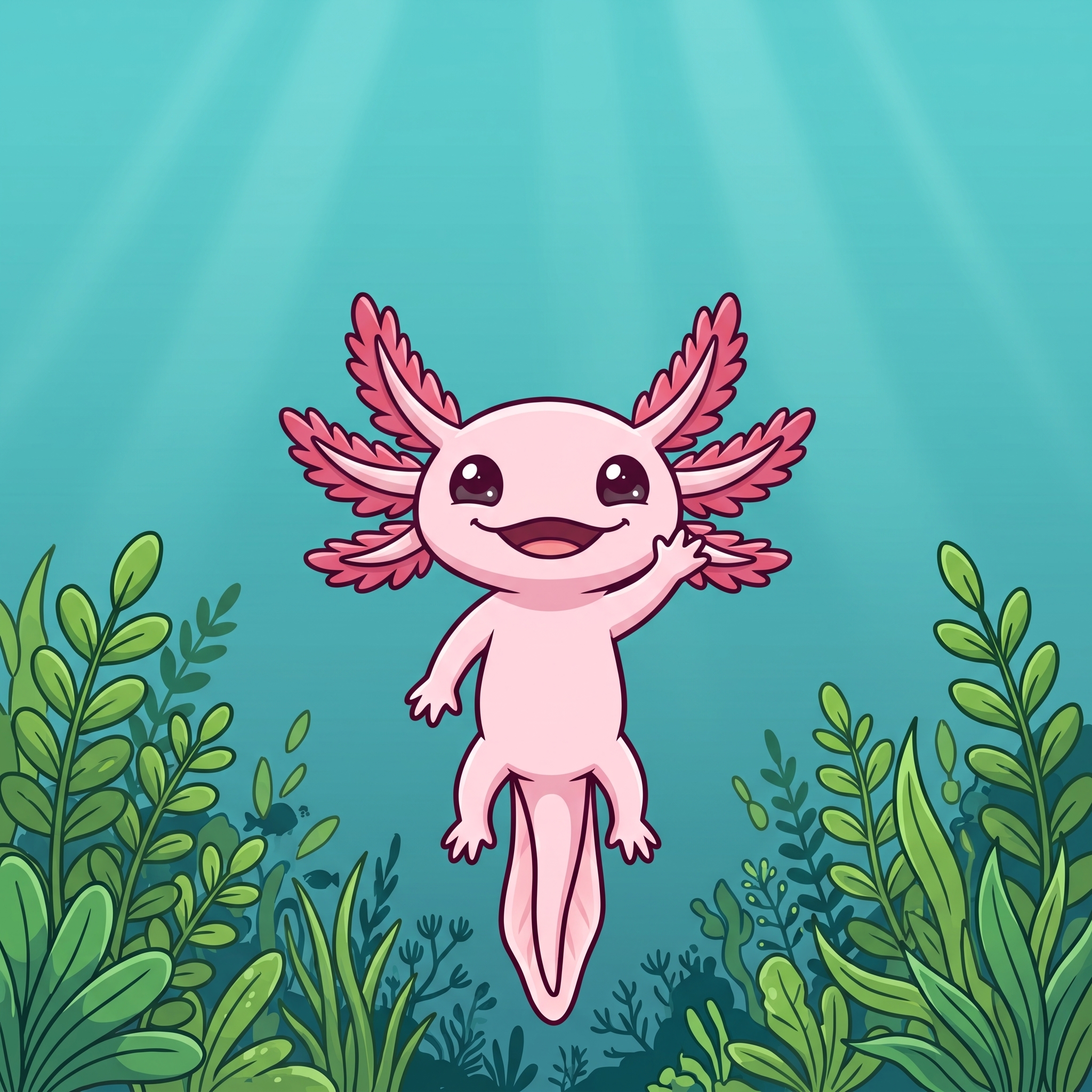
Hi! I'm Axo!
I'm an axolotl, a very unusual salamander from Mexico.
1. The Incredible Life of an Axolotl. Meet Axo the axolotl (Ambystoma mexicanum), a salamander with one of the most remarkable life stories in the animal kingdom. Its name comes from Nahuatl, the language of the Aztecs, and is often translated as 'water dog'.
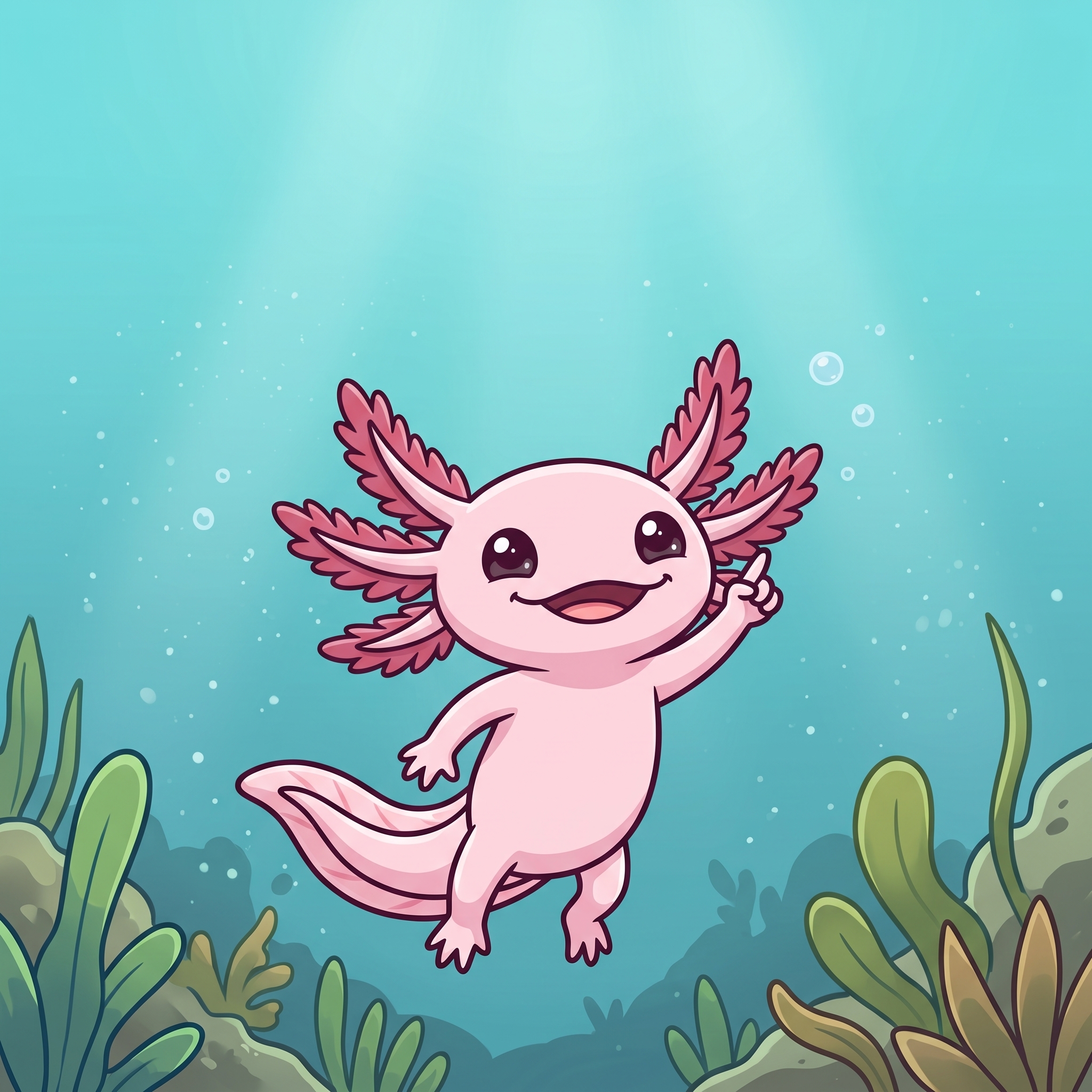
I'm an amphibian!
2. I Am an Amphibian. Axolotls are amphibians, relatives of frogs, toads, and other salamanders. Like all amphibians they are cold-blooded vertebrates, but unlike frogs they skip the dramatic move to land and stay aquatic their whole lives.
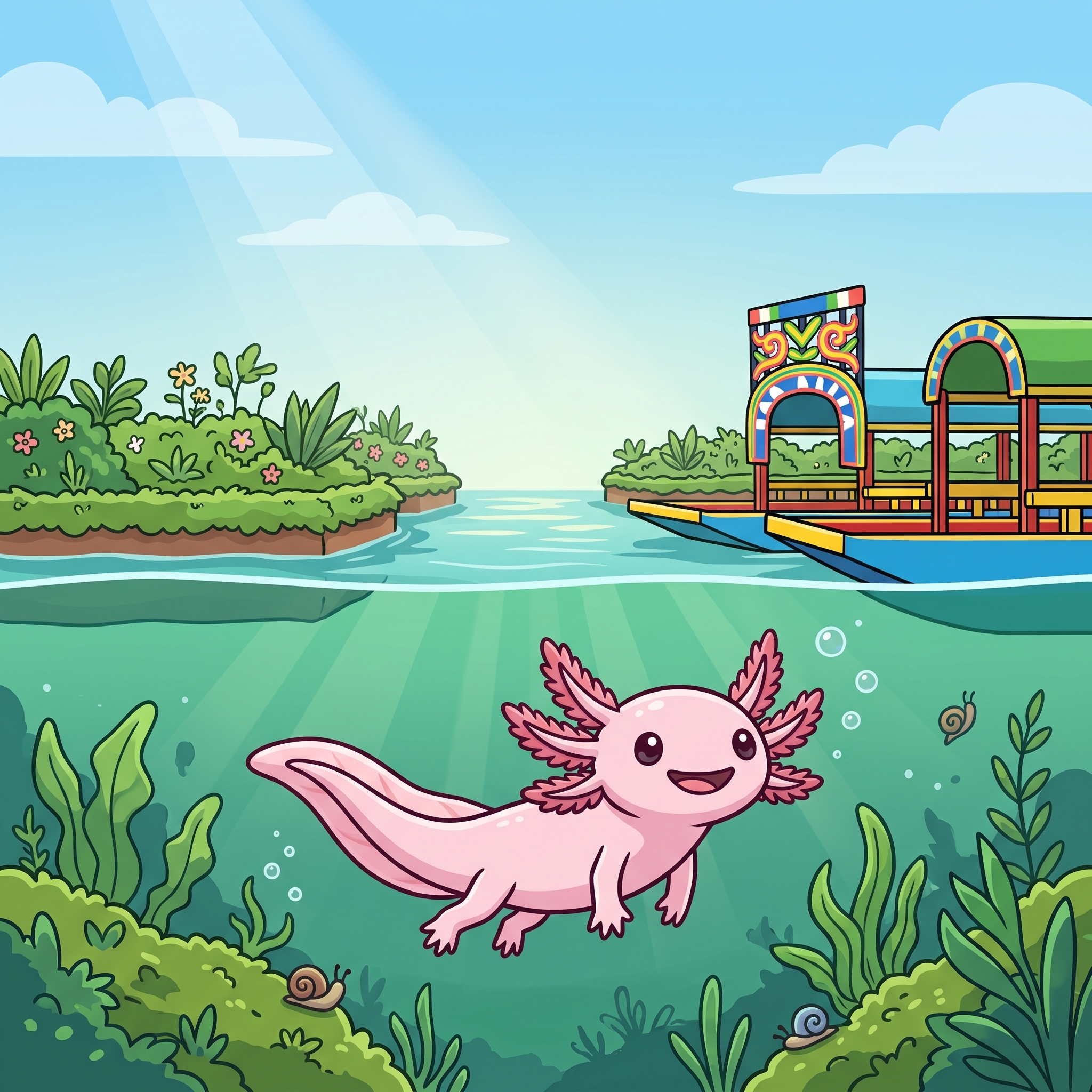
My home is Xochimilco, in Mexico!
3. My Home Is Xochimilco. Wild axolotls live in only one place on Earth: the lake and canal system of Xochimilco, near Mexico City. The canals wind between chinampas, the famous 'floating gardens' first built by Aztec farmers, which still shelter the last wild axolotls today.
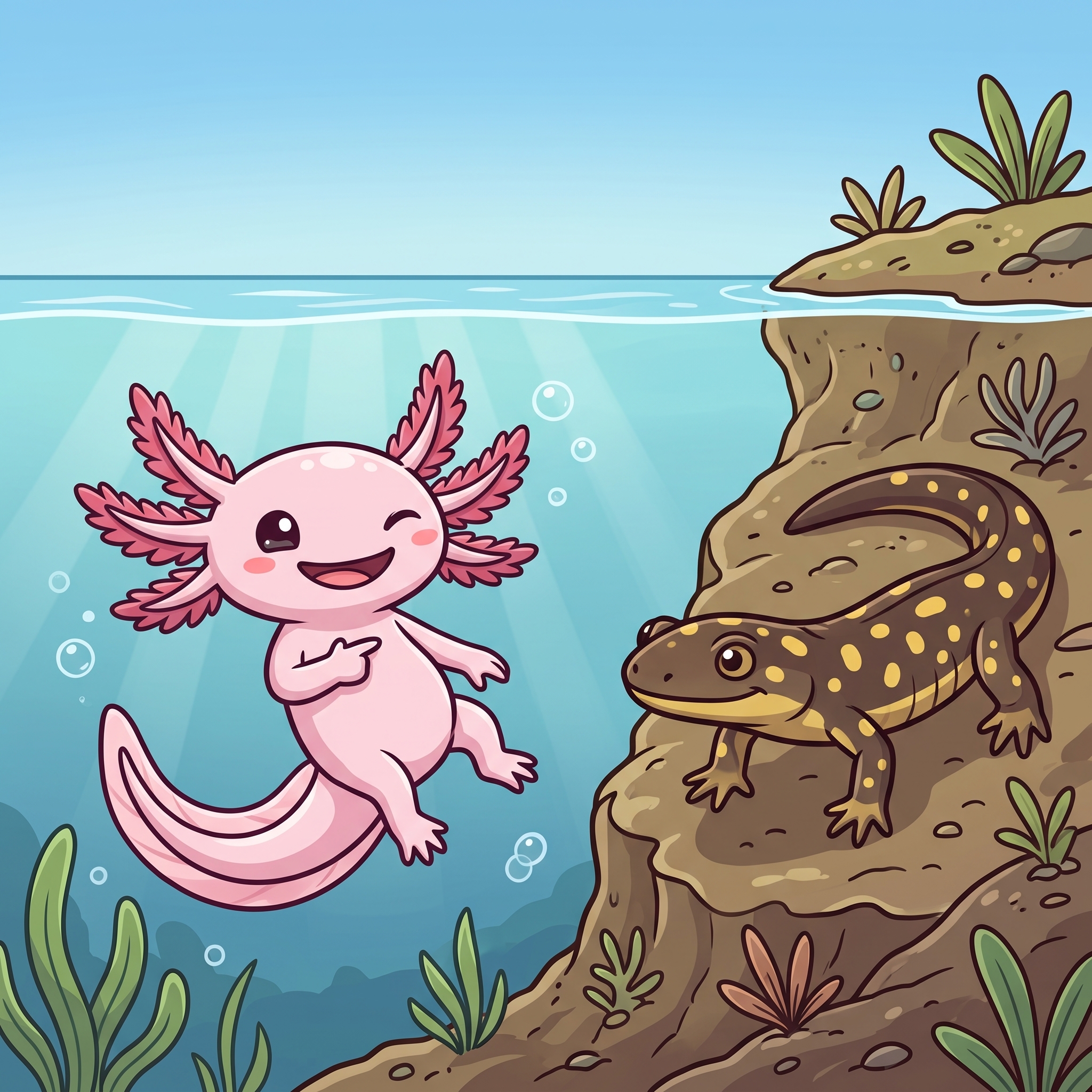
Wait... I never really grow up?
Axolotls keep many juvenile traits for life.
4. Forever Young. Unlike most salamanders, axolotls never fully metamorphose. They keep their juvenile, aquatic features for their whole lives, a trait called neoteny. In nature an axolotl lives, breeds, and grows old while still looking like a larva.
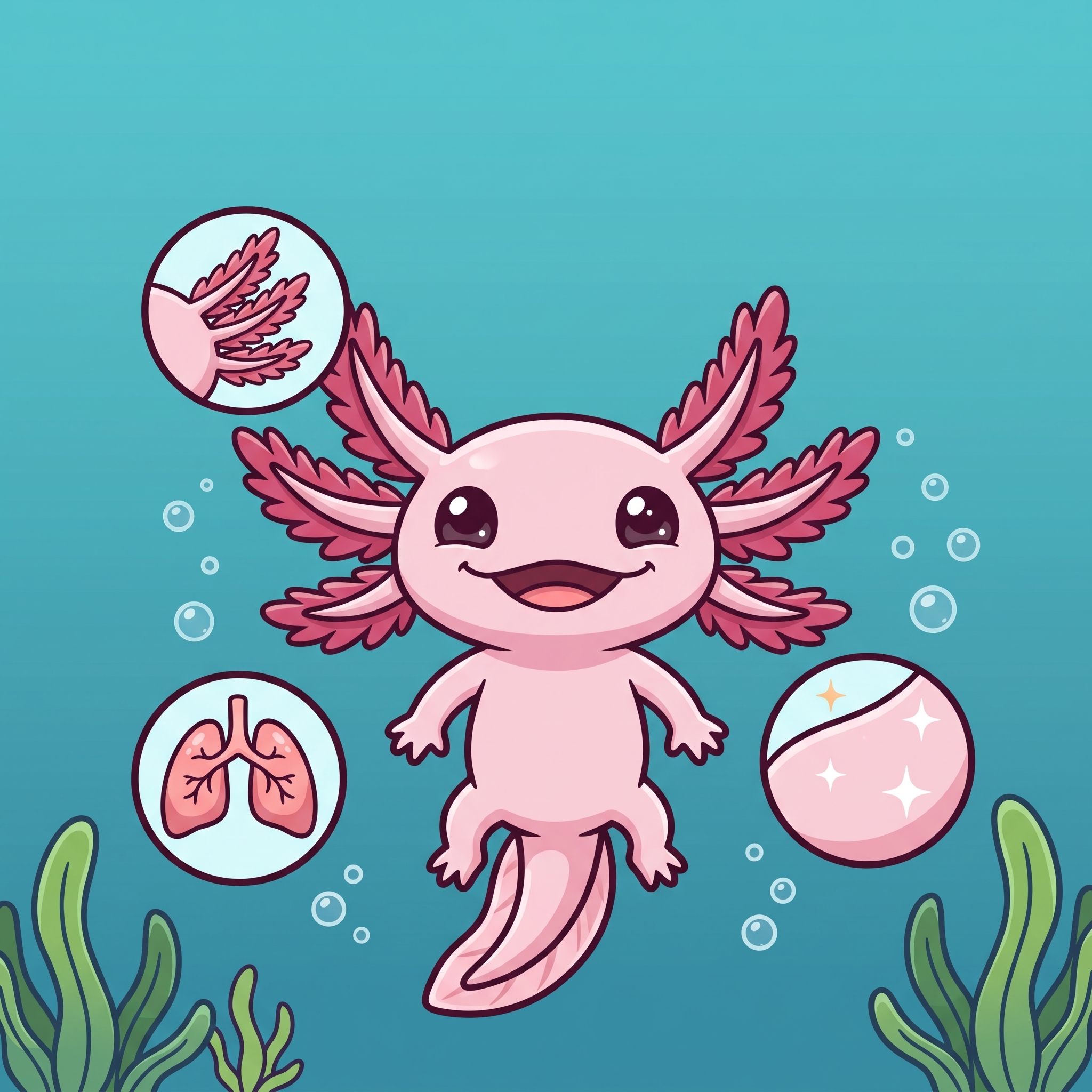
These feathery things? My gills!
5. My Feathery Gills. The feathery structures fanning from an axolotl's head are external gills, which pull oxygen straight from the water. Most amphibians lose their gills as they mature; the axolotl keeps all six branches and flicks them to sweep fresh, oxygen-rich water past their surface.
I can breathe three ways!
6. Three Ways to Breathe. Gills are not the whole story: axolotls also have simple lungs and can absorb oxygen directly through their skin. They will even gulp air at the surface to top up, a triple breathing system that few other animals share.
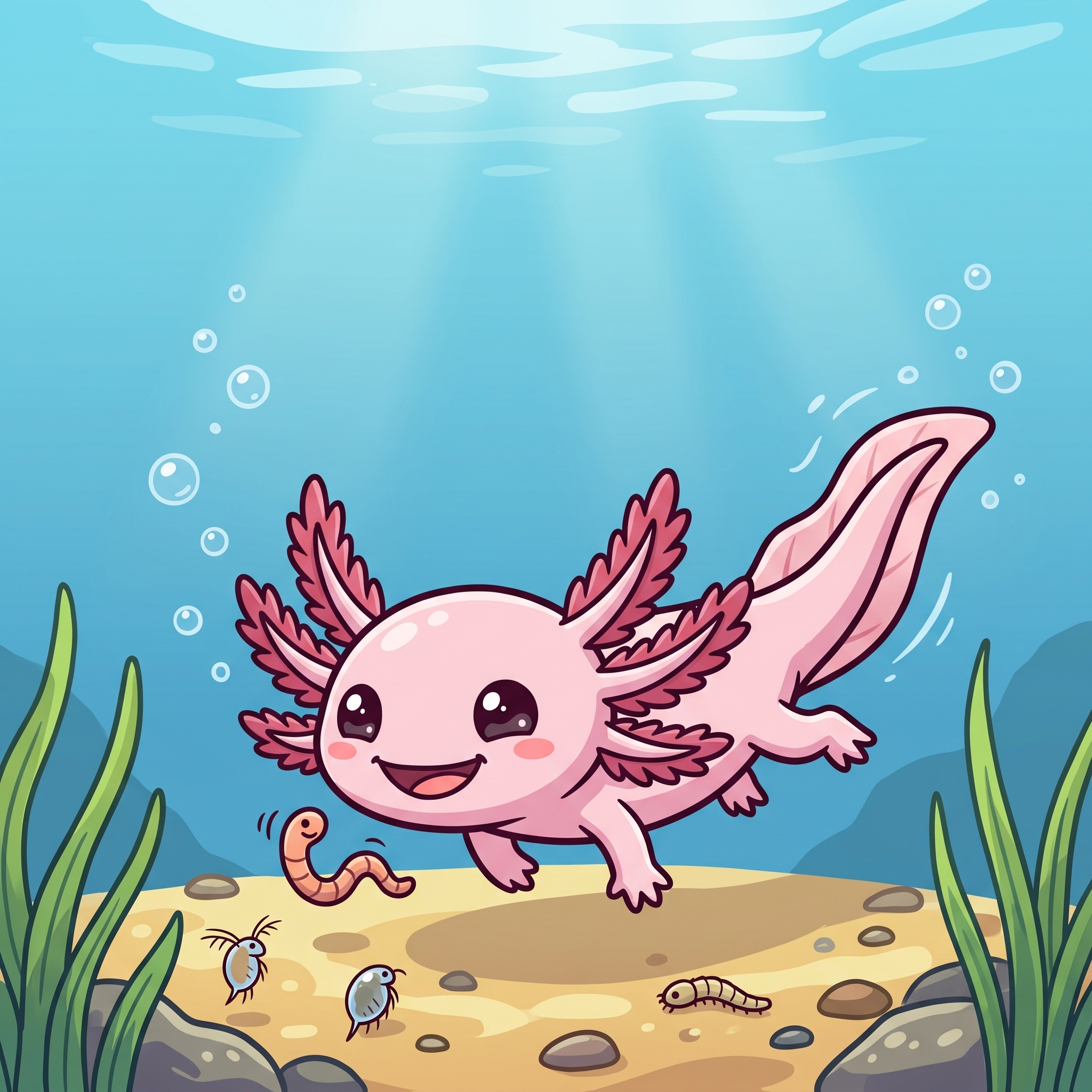
Snack time!
7. Snack Time. Axolotls are carnivores. They eat worms, insect larvae, small crustaceans, and other tiny aquatic animals. Rather than chewing, an axolotl snaps its mouth open to create suction and vacuums its prey in whole.
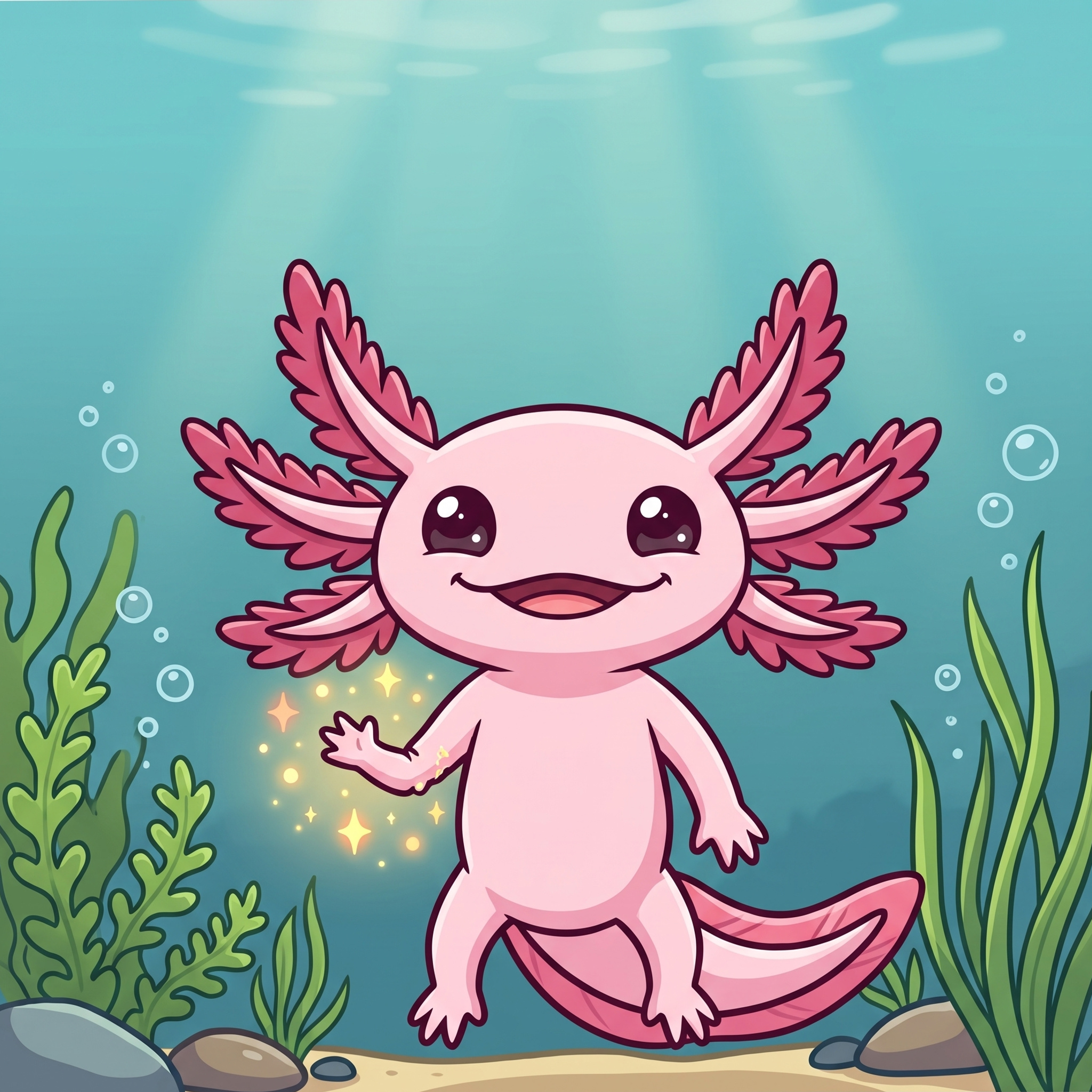
I CAN REGROW MY LIMBS!
8. It Grows Back. Axolotls are champions of regeneration: they can regrow entire limbs and even repair parts of their spinal cord, heart, and eyes. A lost leg grows back over weeks to months, complete with bones, muscles, and nerves, and without a scar.
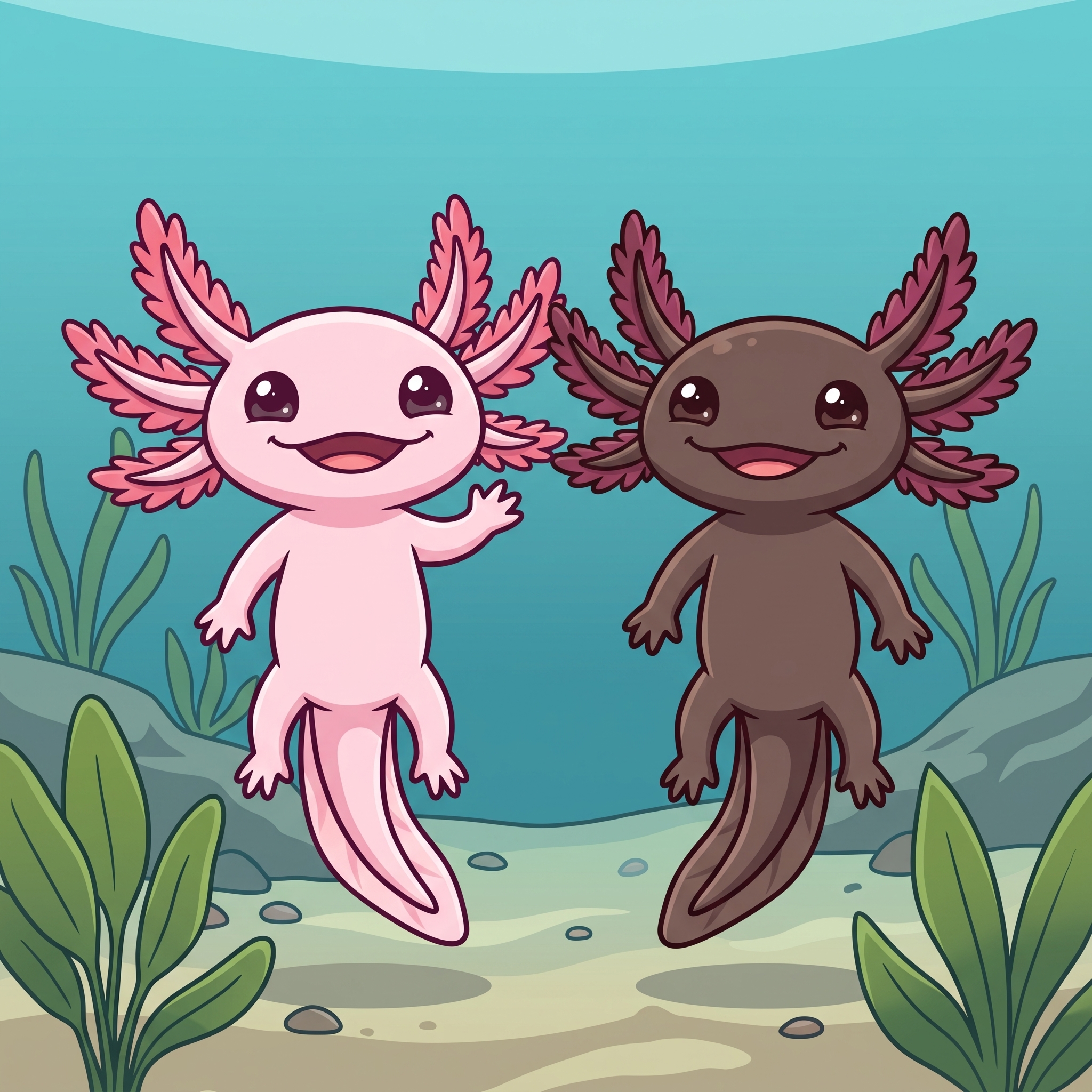
My wild cousins are dark!
9. My Wild Cousins Are Dark. Wild axolotls are usually dark and mottled for camouflage. The famous pink ones are leucistic, and mostly seen in captivity. That pink look traces back to a rare gene spread through pet and lab populations descended from animals collected in the 1800s.
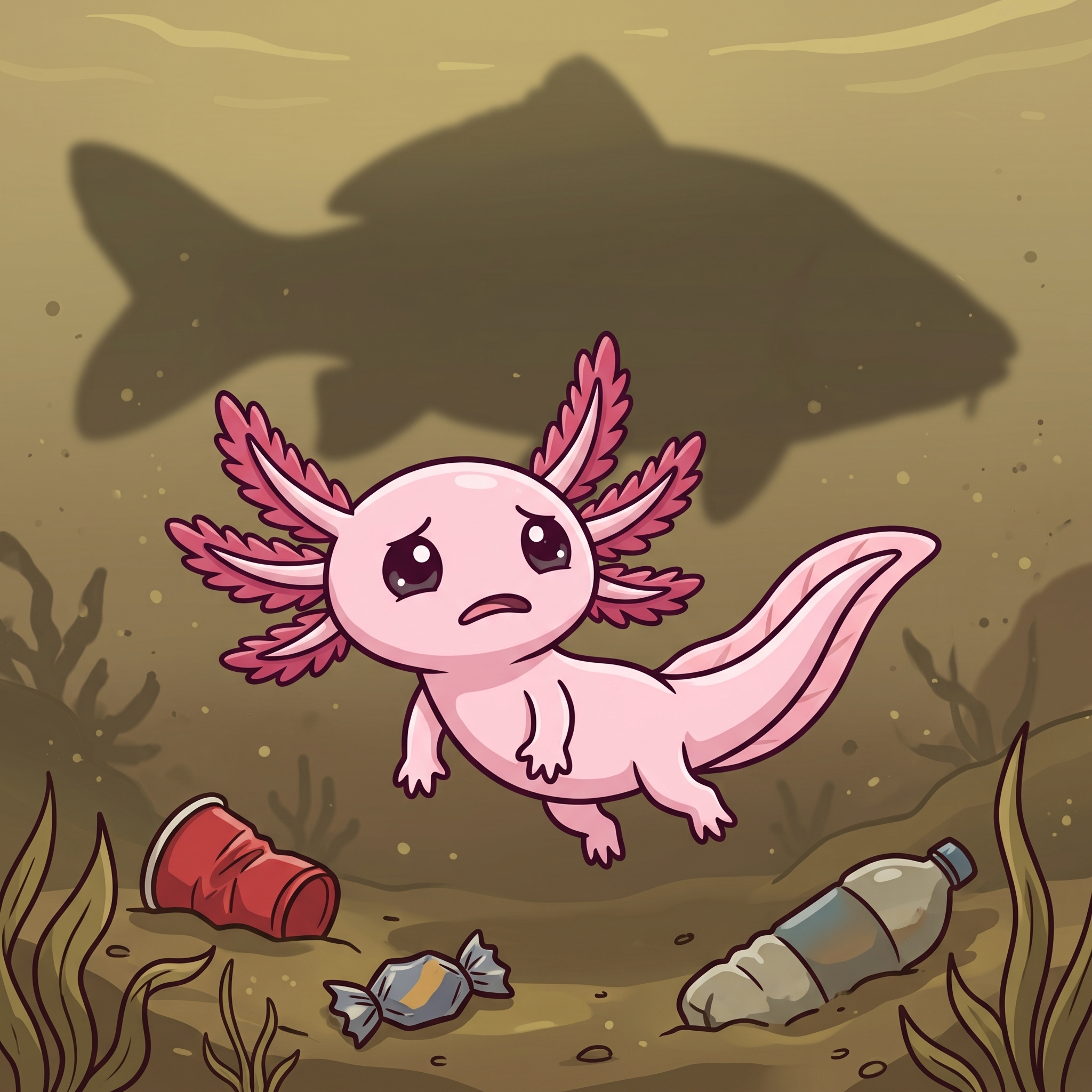
My home is in danger...
10. My Home Is in Danger. Axolotls are critically endangered in the wild. Pollution, habitat loss, and invasive fish threaten their last canals. Introduced tilapia and carp eat axolotl eggs and young, and recent surveys find only a small number of wild axolotls remaining.
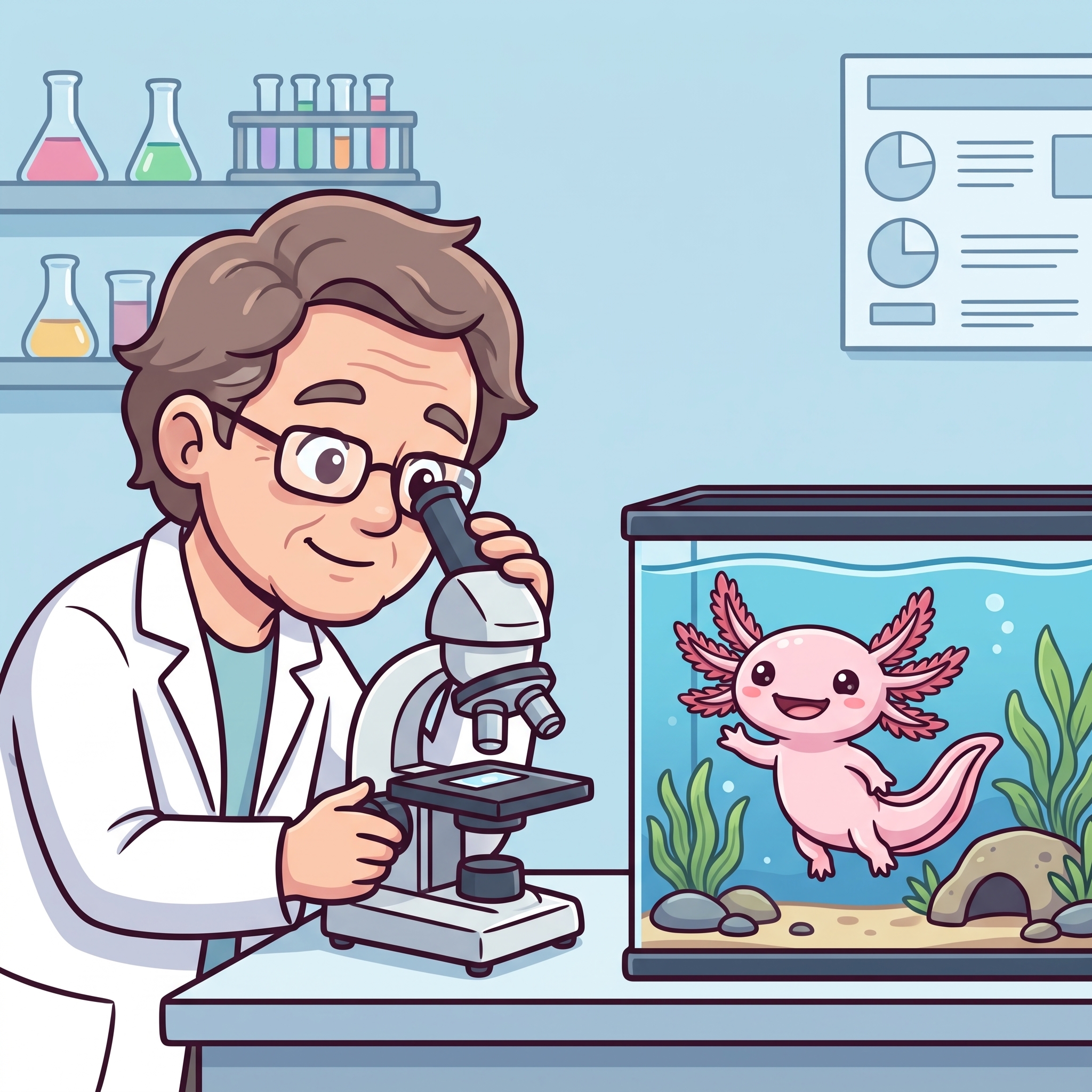
Scientists study my healing powers!
11. Science Heroes. Scientists around the world study axolotls to understand regeneration, hoping to unlock new ways to heal human injuries. The axolotl genome is about ten times larger than a human's, and labs across the world keep colonies to hunt for the genes behind its healing.
Help protect our wetlands!
12. Help Protect Our Wetlands. There is hope: conservation projects are working to restore Xochimilco's wetlands. Local programs build canal sanctuaries with chinampa farmers, and choosing captive-bred pets over wild-caught ones helps too. Caring about wildlife is where protection begins.
Quick Axolotl Facts
Axolotls are amphibians found in the wild only in Xochimilco, near Mexico City.
They keep their juvenile features for life (neoteny) and breathe through external gills, lungs, and skin.
They can regrow entire limbs, which is why scientists study them for regenerative medicine.
They are critically endangered; wetland restoration in Xochimilco is key to their survival.
Make Your Own Comic
This entire comic was generated on Piclayer from a single character sheet and one prompt per batch of panels. Use the AI studio to create your own educational comics, coloring pages, and illustrated stories.